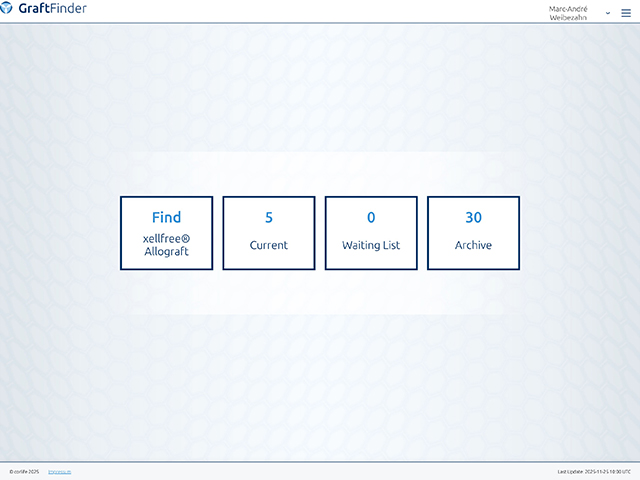
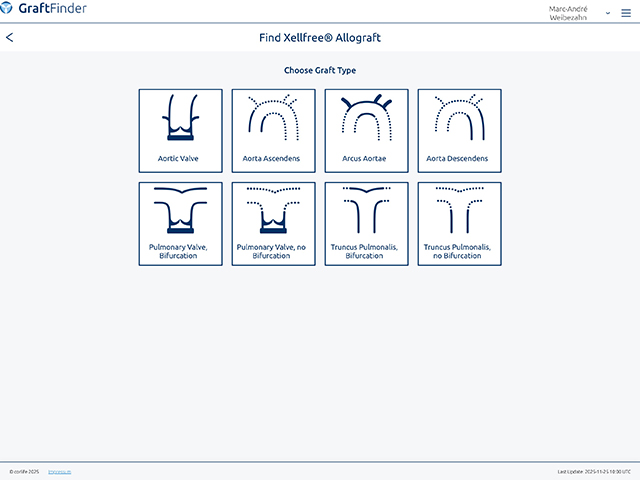
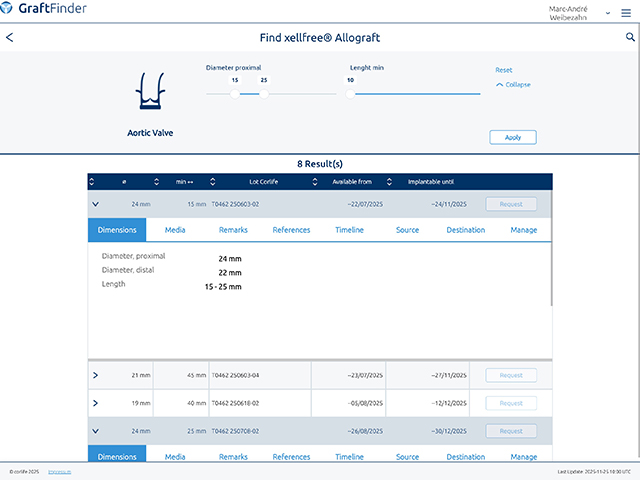
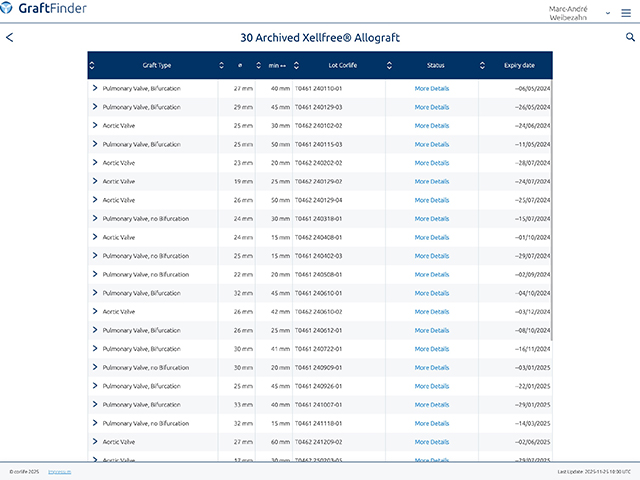
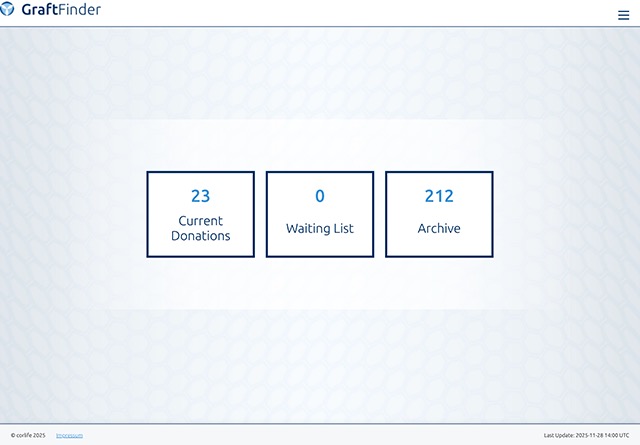
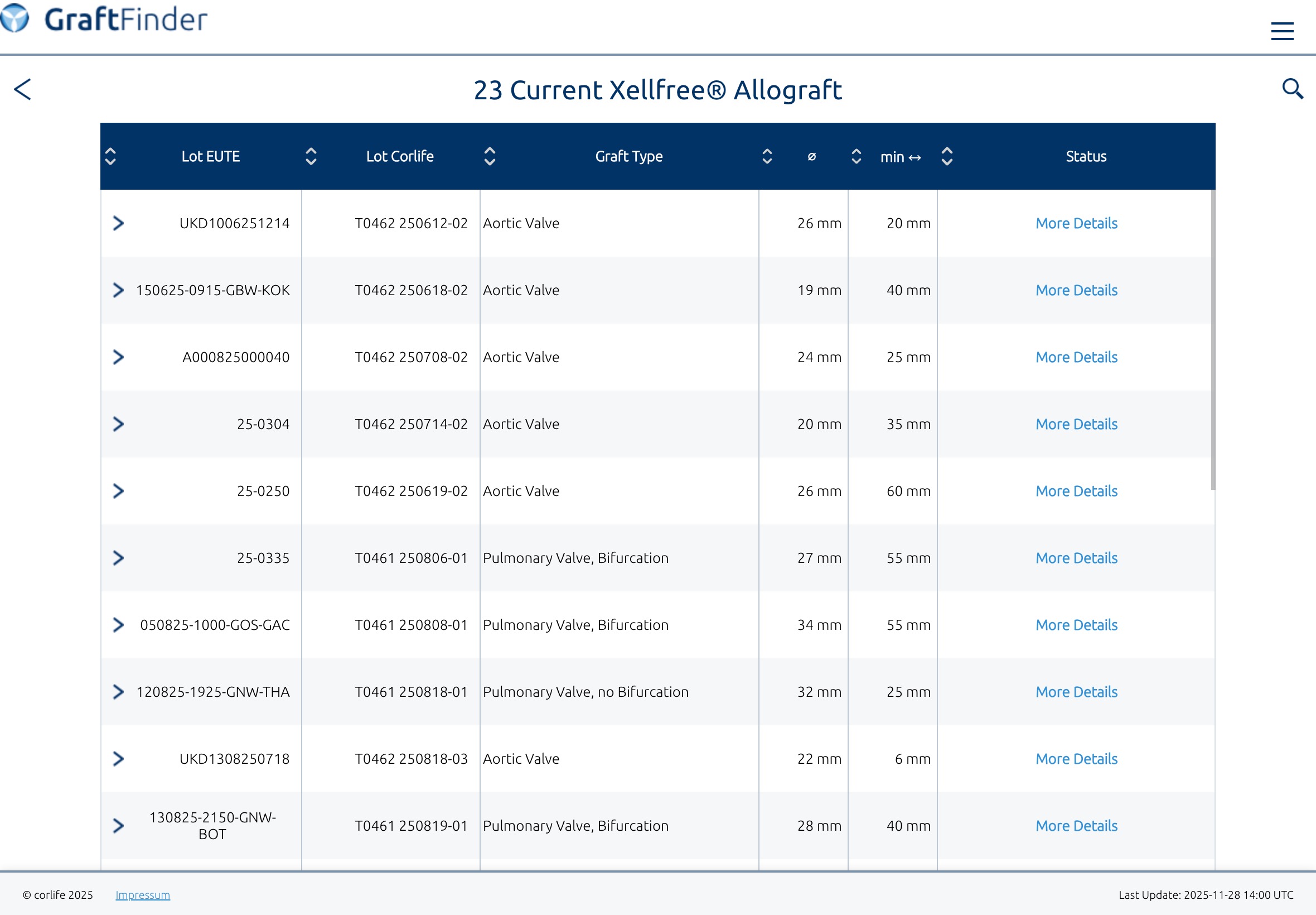
GraftFinder supports clinics and tissue establishments by streamlining the assignment process of cell-free allografts. Demand and assignment are managed through a centralized interface.
For Physicians
Search for cell-free allografts based on
specific parameters
Central access point for requesting cell-
free allografts
Centralized hub for all documentation,
media, and information on cell-free
allografts
For Tissue Establishments
Centralized demand requests for cell-
free allografts, enabling the targeted
assignment of cell-free allografts
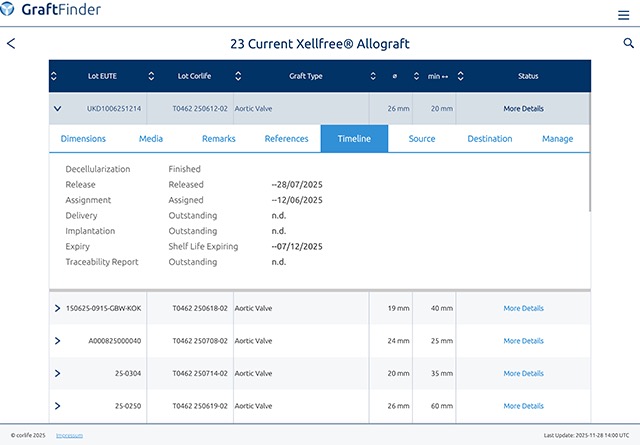
Traceability of cell-free allografts
Centralized hub for all documentation, media, and information on cell-free allografts
You can use GraftFinder on your PC, tablet, and smartphone. Either as a web app or as a native app for Android and iOS. All data is transmitted in encrypted form.
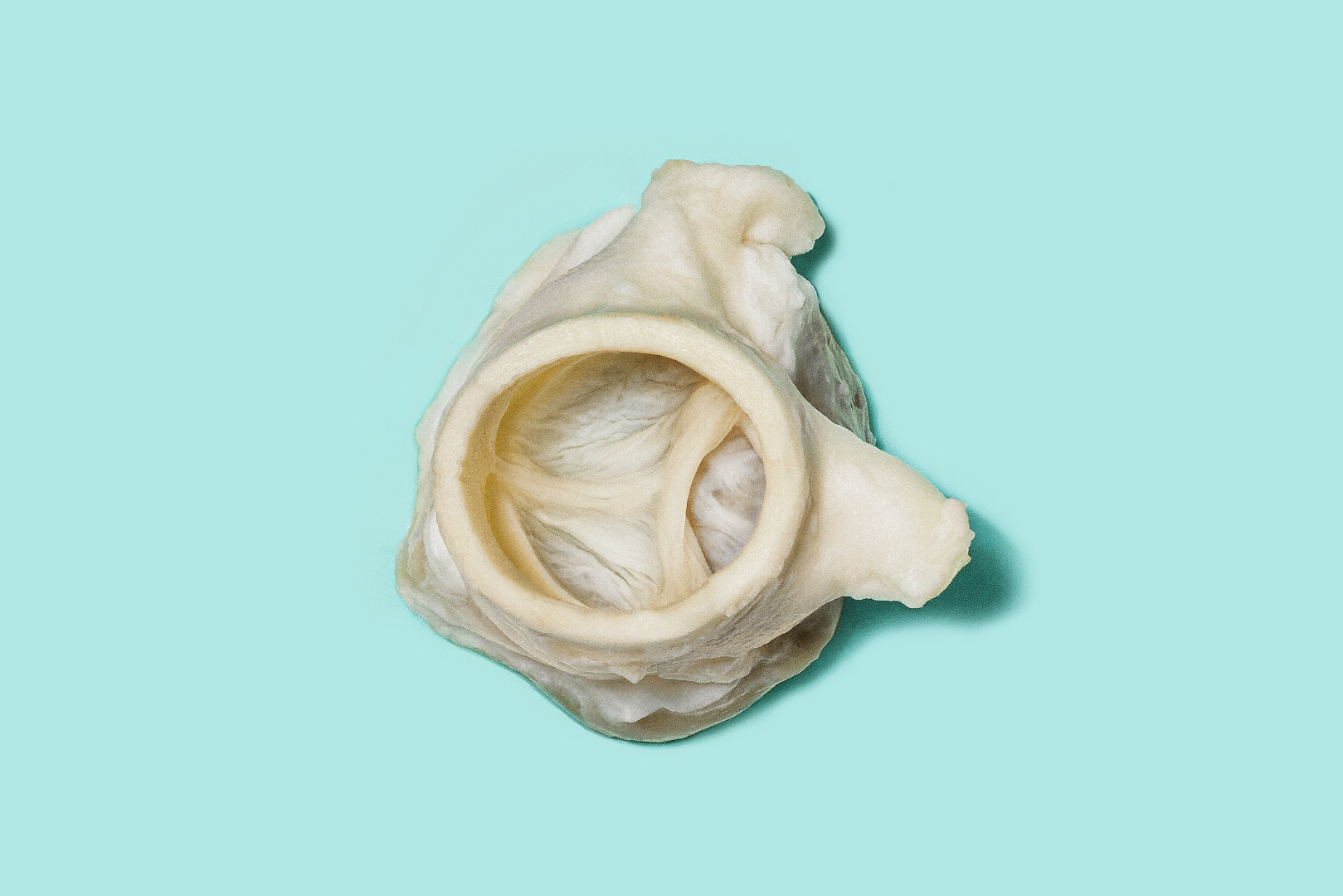
Cell-free allografts are tissue donations from which the donor’s cells have been removed using physical and chemical methods. This process is called decellularization. What remains is the stable connective tissue – and that’s what really matters. Immediately after implantation, cell-free allografts fulfill their intended function.
GraftFinder is initiated and operated by
corlife, the leading provider of cell-free
allografts in Europe. We process human cardiovascular tissue
to ensure high biocompatibility across a
broad range of patients. Our mission is to
sustainably improve the quality of life of
people undergoing surgery of the heart or
central blood vessels. To achieve this, we
develop innovative products
Unlike organs that require centralized mandatory mediation, there are no binding rules for the fair assignment of tissue donations. Instead, individual tissue establishments act on their own responsibility.
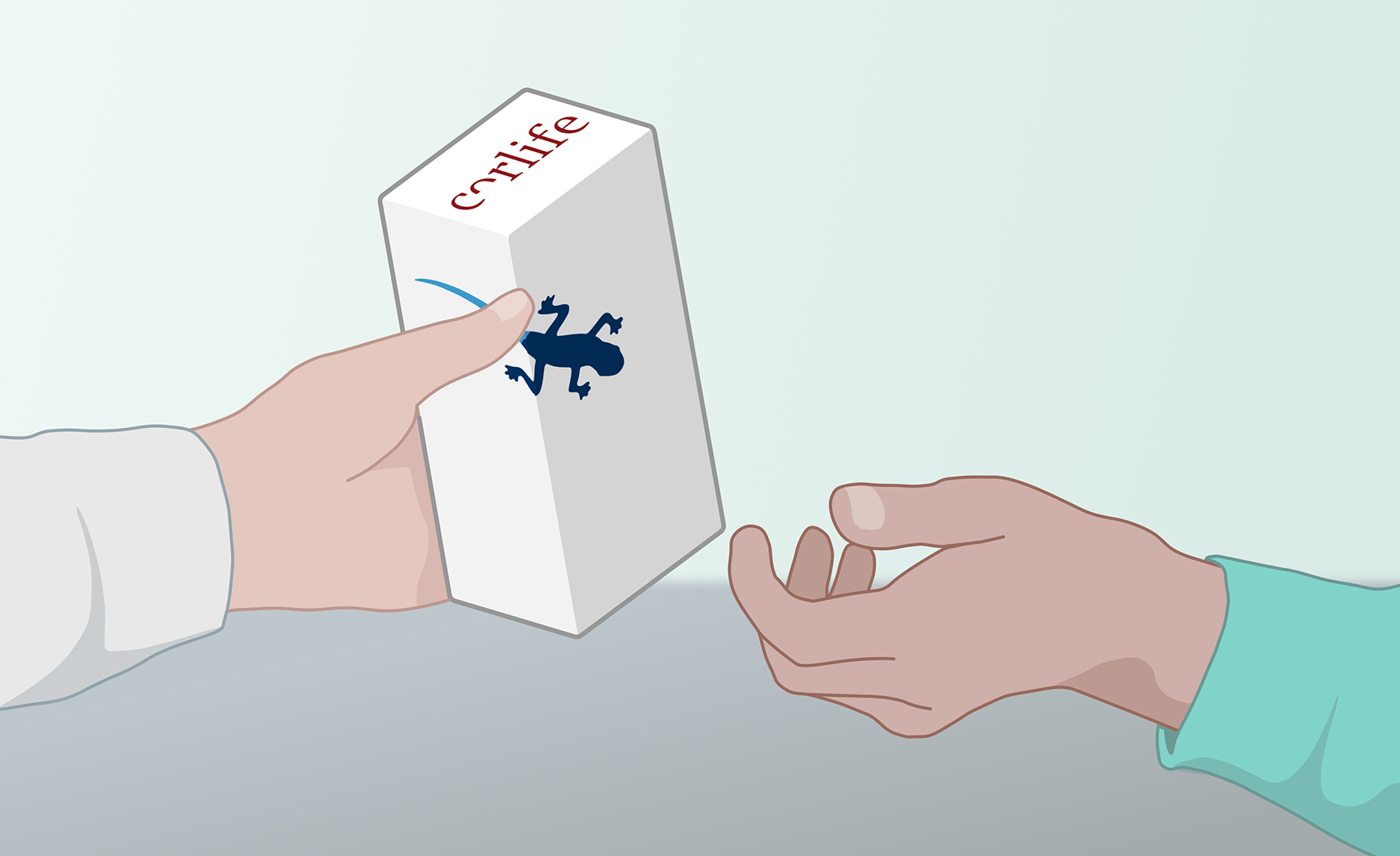
When corlife assigns cell-free allografts, the following procedure applies: patient-specific requests for cell-free allografts are collected on a waiting list. Available grafts are then assigned to patients based on descending waiting time.
If no requests are pending, the first-come, first-served principle applies: the graft is made available to all interested clinics through GraftFinder and assigned to the clinic that submits a reservation request to corlife first.
Journalists and regulatory authorities can stay informed about GraftFinder and explore the platform in a read-only view. Register to request observer access.
As a patient, can I search for a cell-free allograft on GraftFinder?
Is data from donors or recipients stored?
How do I gain access to GraftFinder?
Choose a question from the list.
What is GraftFinder?
GGraftFinder is a program designed to support the assignment of cell-free allografts. Its purpose varies depending on the user group:
For Physicians:
Search for cell-free allografts based on specific parameters
Central access point for requesting cell-free allografts
Centralized hub for all documentation, media, and information on cell-free allografts
For Tissue Establishments:
Centralized demand requests for cell-free allografts, enabling the targeted assignment of cell-free allografts
Traceability of cell-free allografts
Centralized hub for all documentation, media, and information on cell-free allografts
For Interested Third Parties (e.g., journalists, regulatory authorities):
Third parties can explore GraftFinder to familiarize themselves with the platform and verify, for example, that it is not a trading platform.
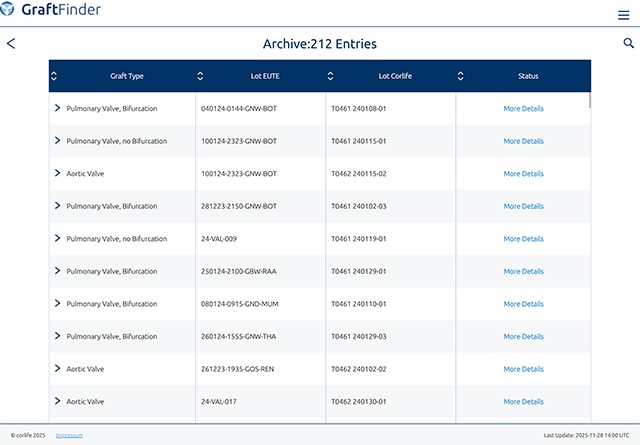
GraftFinder is an image and information database that retrieves and displays data without interpreting it.
Can human tissue be purchased through GraftFinder?
No. Human tissue is not for sale. GraftFinder is an image and information platform that displays data on cell-free allografts.
Who can use GraftFinder?
The program is available to a restricted group of users: licensed physicians and their representatives, tissue establishments, and third parties with a legitimate interest.
Can I, as a patient, search for a cell-free allograft on GraftFinder?
Whether a cell-free allograft is the optimal treatment option for you is first determined by your treating physician in consultation with you. If the decision is made to use such an allograft, the implanting center can use GraftFinder to find a suitable cell-free allograft for you. Patients do not have direct access to GraftFinder.
Are donor or recipient data stored?
To fulfill its function, GraftFinder requires the exchange of anonymized patient and donor data. At no point are full names or other information shared that could identify an individual without additional assistance. See the GraftFinder Privacy Policy for more details. GraftFinder privacy statement
How can I gain access to GraftFinder?
Access to GraftFinder is controlled. All users must register first. Access rights are granted by corlife. If you are interested in using GraftFinder and belong to the eligible user group, please contact us here.